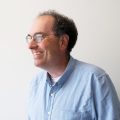
AMHERST — Doctoral programs are “mission critical” at the University of Massachusetts, but Provost Fouad Abd-El-Khalick is advising academic departments to use caution in how they go about admitting PhD students.
In a presentation to the Faculty Senate on Thursday, coming a few weeks after the issue of a decline in doctoral admissions at UMass was brought to the meeting, Abd-El-Khalick said his message is for faculty to be aware of the “bandwidth” each college has for accepting students in the face of financial challenges.
As a Carnegie R1-VH institution, UMass should recruit for multi-year, full-time support, which means providing these students 20 hours per week of teaching, research or clinical and field work for four years, according to Abd-El-Khalick. An assistantship offers tuition and health benefits for these students.
“Twenty hours, four years provides the best support and makes us competitive to attract the best and brightest,” Abd-El-Khalick said.
There were 346 doctoral admissions in fall 2025, down from 477 in fall 2024, even though applications were up from 5,856 to 6,185.
Doctoral students, he said, should be engaged in work related to their progress toward diplomas, and not other unrelated jobs, such as operating buses on campus. A first step is aligning admissions to capacity, not bringing in students if there is insufficient funding.
Abd-El-Khalick also outlined the cost to UMass, about $53,000 to $59,000 for nine-month appointments, and $67,000 to $76,000 for 12-month appointments.
Currently, 75% of doctoral students are receiving the 20 hours for four years, but 15% are getting less than 10 hours, meaning they are not receiving an assistantship.
“I just believe we need to do better for doctoral students,” he said.
Even with the challenges, he said there’s only been a slight decline in PhD admissions over the past five years, nowhere near the drop that representatives from the Graduate Employee Organization have contended.
In response to the presentation, concerns were raised by faculty members and others.
Sonja Drimmer, associate professor of medieval art and graduate program director at the College of Humanities and Fine Arts, said there was a smaller class admitted due to the restrictions imposed by the provost.
Another colleague described major challenges.
“This admission cycle was really catastrophic,” said Kathryn Lachman, a professor of comparative literature and graduate program director in the College of Humanities and Fine Arts.
“If what happened last year created this miscommunication, we’ll get this straightened out,” Abd-El-Khalick said.
Getting the most applause from those in the Herter Hall auditorium was Monica Garcia, a member of the Professional Staff Union, who argued that doctoral students aren’t getting fair compensation because higher salaries are instead being paid to upper administration.
“Reverse course before irreversible damage is done,” Garcia said.
Graduate Employee Organization Co-Chair Isaac Pliskin said his union represents roughly 2,700 graduate workers and, even if 75% of doctoral students have assistantships of 20 hours per week, they are having trouble making ends meet.
“Why is the focus not on better pay overall, or calendar-year funding?” Pliskin said.
Luz Rapaport, a graduate worker, said master’s degree students are receiving “deeply unequal” treatment at UMass.
Abd-El-Khalick, though, said master’s programs at most universities tend to be revenue generators and those students don’t receive compensation.
“Across higher education, it is an exception to fund master’s students,” Abd-El-Khalick said.
Abd-El-Khalick said he doesn’t want to find UMass in the same place as Syracuse University, which recently cut 41 bachelor’s degree and 33 certificate programs.
Coming to UMass from California, Toki Lee, a doctoral student in English, said there is a general feeling of not being cared about on the campus. That is illustrated both by the pay and by the condition of the buildings.
Chelsie Field, who handles communications for the Elaine Marieb College of Nursing, said the nursing school is already facing cuts that will decrease access for students and that assistantships are not offered to these students, meaning preparing more nurses for the workforce could be difficult.
“What students are we leaving out who can’t afford to study here?” Field said.