Overview:
At the latest talk in the Whately Civic Association's Speaker Series, Community Health Center of Franklin County CEO Dr. Allison van der Velden outlined significant changes to expect for health care in Massachusetts due to the One Big Beautiful Bill Act. The act will narrow eligibility for MassHealth, as well as create a significant funding shortfall and a loss of health insurance for up to 300,000 Massachusetts residents. Van der Velden said the Community Health Center aims to break down barriers to care, but the changes will result in a significant hike in uninsured patients, increased costs and a need for more staff to handle eligibility paperwork.
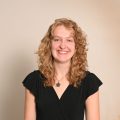
WHATELY — As part of the Whately Civic Association’s Speaker Series, Community Health Center of Franklin County CEO Dr. Allison van der Velden informed roughly 25 attendees about upcoming changes to the health care landscape as the One Big Beautiful Bill Act scales back Medicaid eligibility and funding.
Van der Velden started her talk at Whately Town Hall last week by introducing the nonprofit as a health center that connects area residents with primary care, no matter their health insurance status.
“You can have no insurance, you can have Medicaid [or] Medicare, you can have fancy employer-based insurance,” van der Velden told the audience. “We serve the entire community. Whoever you are, we are for you. … We are very community-centered, in part because it’s required and in part because it’s the only way we know how to do it.”
Van der Velden then pivoted from the Community Health Center’s mission to the shifting realities the center and its patients can expect, both inside and outside their exam rooms.
“There are a sea of changes happening,” she prefaced.
The CEO traced many of the changes back to the One Big Beautiful Bill Act‘s hit to MassHealth, which is Massachusetts’ version of Medicaid. Starting on Jan. 1, eligibility for MassHealth will narrow. Van der Velden cited immigration status as one determinant of eligibility, mentioning the population of Haitian immigrants in the Greenfield area as a group that will be vulnerable to these changes. She described the increase in work requirements and the expectation to prove eligibility every six months as not only new headaches, but barriers for insurance coverage.
“This is a huge burden. It’s not easy. The paperwork is challenging to begin with, sometimes it requires professional help, and the health center does have folks who can help people navigate this, but if you add complicating factors like someone who’s working two or three jobs, doesn’t have time to sit down and fill out paperwork, someone whose literacy level is not very advanced, someone whose English is difficult to work in even if they speak it, these forms all come with challenges,” van der Velden said.
She added that the paperwork includes a “confusing” language of its own, with terms like “deductibles,” “premiums” and “copays.”
“These are words and languages that don’t exist in other places,” van der Velden said. “It really is a major burden, and any time we have a barrier like that, Community Health Center’s goal is to break down barriers to care.”
The One Big Beautiful Bill Act will create a “significant funding shortfall” of between $3.2 billion and $3.5 billion annually for MassHealth, van der Velden said. The state projects that this loss will strip up to 300,000 Massachusetts of their health insurance.
“We can get a little bit in the weeds when we’re talking about dollars, so I want to pull back and talk a little bit about what this all means,” van der Velden continued.
She said the numbers carry new realities of a significant hike in uninsured patients walking into the Community Health Center of Franklin County, health centers hiring more staff to handle the eligibility paperwork and the cost of care rising as a result.
“How are we going to provide care when the dollars are going to decrease and the cost increases?” van der Velden asked, the question hanging over the health center.
In residents’ daily lives, these changes can manifest into situations where individuals are living on only half the prescribed dosage of their medications or ignoring a cause for concern for longer than usual, she said.
“What happens is the level of acuity of a disease increases,” van der Velden said. “When that happens, more folks start to show up at emergency rooms and hospitals, more people need chemotherapy who could’ve had a minor intervention, and that total cost of care for the population increases.”
Hands shot in the air to ask questions regarding specialized care, a shortage of primary care access in rural Franklin County, and the fight against these changes and projections.
In response, van der Velden shared her predictions of abundant 911 calls as last-ditch efforts to reach health care and a drop in the affordability of specialized care beyond the first visit with a primary care doctor.
When asked if the state is challenging the federal government in any way, van der Velden replied, “The state is fighting a lot of battles, and many of them impact our health center.”
While she said state laws shield Massachusetts residents from certain federal health care decisions, “with regards to these [changes], I don’t think we have the power,” mentioning that the federal government sets Medicaid requirements.
She added, “The [attorney general] has been going to bat for health care in Massachusetts.”
Across the health center’s locations in Greenfield, Turners Falls and Orange, she stressed that her staff members are going to bat for patients, too.
“We have a staff person whose job is to argue with your health insurance because they should cover something that they denied. That person’s name is Morgan and he’s wonderful. He’s like punk rock embodied, fighting the man,” van der Velden said to laughter from the audience.
After the talk, Whately Civic Association member George Owens claimed the presentation helped educate listeners outside of their typical sources for information.
“I think a lot of people are siloed in different environments. … It reminds us that there’s a lot going on,” Owens said.
Fellow member Debra Carney said she left the talk informed about the weight of “the sorrow of the situation right now … the sorrow, the challenge, the uncertainty.”