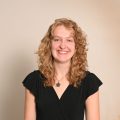
GREENFIELD — Kimberly MacPhee has retired from the Franklin Regional Council of Governments (FRCOG), closing out 23 years of plotting new paths for the organization to support local towns as the land use and natural resources program manager.
Before settling in Montague Center, MacPhee, 62, grew up exploring forests and mountains in Weathersfield, Vermont, while horseback riding with her grandmother, a naturalist.
“Trail riding, you’re listening to the birds and the wind come through the leaves,” MacPhee said. “I’d be looking at what was around me. … There was always this, ‘Why? Why is that rock there, or why is this stream there, or why is there this hill that you don’t necessarily see until all the leaves are off the trees?”

At Smith College, MacPhee majored in history until she took a geology class.
“Geology helped me understand,” she said. MacPhee later earned a master’s degree in environmental science as well.
After working for the Cape Cod Aquifer Management Project, an engineering firm in Cambridge and a regional planning agency in upstate New York, among other positions, she spotted an advertisement for a job at FRCOG in The Boston Globe.
While “fluvial geomorphology” may sound unfamiliar to most people, the term comes up in many conversations at FRCOG, since MacPhee brought her background in geology and environmental studies to the role in 2002.
According to FRCOG Executive Director Linda Dunlavy, who learned the term from MacPhee, “‘Fluvial geomorphology’ is a really great term for basically, where does the water want to go? Let the water go where the water wants to go.”
In her first few years at FRCOG, MacPhee secured funding for an assessment of the Deerfield River Watershed’s nonpoint pollution, or pollution that does not originate from a single source, like trash entering rivers and streams through stormwater runoff. The assessment uncovered erosion that was threatening the wells, roads and bridges along the Deerfield River Watershed, an “aha moment” for MacPhee that sparked her focus at FRCOG.
“One of the things that’s very clear is watershed boundaries cross town boundaries,” MacPhee said. Through her work at FRCOG, she tackled the question, “How can towns work together to address not only their local concerns but work together to address the watershed as a whole?”
MacPhee connected town committees in Franklin County with state agencies and nonprofits like the Franklin Land Trust and Connecticut River Conservancy to build the resiliency of local watersheds, including the Connecticut River, Deerfield River, Clesson Brook, North River and South River watersheds.
In Deerfield, MacPhee helped the town manage stormwater runoff along Bloody Brook to prepare for future flooding and secure grants for other projects like hazard mitigation, according to former Deerfield Selectboard member Carolyn Shores Ness. She described longtime collaborator MacPhee as “calm” and “methodical.”
“It’s a team effort, and it’s always important to have as many informed team members as possible,” Shores Ness said. “Kimberly always has been able to come to the table and add to the mix that made it possible to be successful in attaining the grants.”
In Conway, MacPhee helped Janet Chayes, chair of the Open Space Committee and founder of the Friends of the South River citizens group, and other volunteers craft grant applications for a study of the South River that identified 30 areas hit with “serious erosion,” degradation and flood damage, Chayes said. Equipped with this information, the town pursued a restoration project with MacPhee’s guidance. According to Chayes, the project stretched several years, including the peak of the pandemic.
“She’s so patient and she answers questions, and she understands these processes take a long time and she sticks with it,” Chayes said of MacPhee. “We faced innumerable challenges, but she has persevered.”
Shores Ness and Chayes stressed the importance of MacPhee’s assistance in small towns with limited staff.
In 2019, FRCOG published “A Framework for Resilience,” a “capstone” project for MacPhee that forecasts the effects of “climate change stressors” on natural resources and habitats, health, welfare and the local economy for 14 towns in the Deerfield River Watershed, along with paths to prepare.
About six years later in March 2025, MacPhee used a $646,000 Municipal Vulnerability Preparedness (MVP) Action Grant to form the Resilient Deerfield River Watershed Coalition and encourage discussions across town lines about implementing the recommendations of “A Framework for Resilience.”
In her FRCOG office, MacPhee kept a folder of project ideas. According to Dunlavy and Jessica Atwood, director of planning at FRCOG, MacPhee embodied the persistence to turn these brainstorms into steps on a checklist.
“She was able to envision the steps to get there, which is an art unto itself, but it’s also an art when all of the grants that funded her program were discretionary, and so to keep that vision going, she had to convince the [Executive Office of Energy and Environmental Affairs] that the vision was worth funding, project after project after project,” Dunlavy said. “That takes persistence, and innovation, and imagination and good writing.”
“In so many instances, we were building a plane as we were flying it,” MacPhee said of her work with her colleagues. “While the focus of work that [FRCOG] does is going to be constantly evolving because they’re looking toward the future and what the communities need, I don’t think that thread of resiliency at those scales is ever going to go away.”
Allison Gage flew the plane with MacPhee for more than five years as a land use and natural resources planner at the organization, starting in 2019. After nine months at the Massachusetts Department of Energy Resources, Gage returned to FRCOG on Feb. 26 to fill MacPhee’s open seat, now as the “energy and environment program manager.”
“I really missed working with communities on the local level and doing the implementation work, so it felt like the right time to come back,” Gage said. “It’s a different title, but it’s building on all the work we’ve been doing.”
With more free time in retirement, MacPhee said she plans to meet new people, craft, travel and explore trails in New Hampshire and Wyoming on horseback — the hobby from her childhood she recently rekindled.